


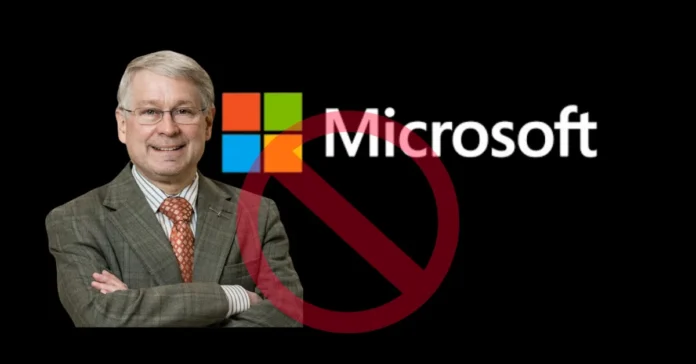
John Langford Quits Microsoft after fourteen years there. His departure follows Microsoft’s major AI restructuring. He believes research deserves greater attention.
However, Microsoft’s priorities appear increasingly focused on scaling. His decision raises important questions about innovation.
Key Takeaways
- John Langford leaves Microsoft following AI restructuring. He believes research receives insufficient organisational support.
- AI Frontiers has ended under Microsoft’s restructuring. Langford says the team lacked future opportunities.
- His Full Bandwidth Transformer research offers potential savings. Similar research could make AI significantly cheaper.
Why John Langford Says Goodbye to Microsoft After AI Restructuring
John Langford spent over fourteen years at Microsoft. He joined Microsoft Research during May 2012. He helped establish its New York research laboratory. Previously, he worked at Yahoo! Research and IBM.
After ChatGPT launched in 2023, things changed. Langford co-founded AI Frontiers with colleagues. Their goal involved supporting smaller research teams. They wanted independent ideas competing against larger laboratories.
The group eventually included approximately fifty people. Its research focused heavily on artificial intelligence agents.
Some important projects included:
- AutoGen, an important agent development framework.
- Fara-7B, Microsoft’s computer-use AI model.
- Research exploring more efficient AI architectures.
However, Microsoft’s restructuring changed everything for them. AI Frontiers moved into Microsoft AI. This transition happened during September 2026.
Microsoft AI was established during March 2024. Satya Nadella hired Inflection’s Mustafa Suleyman. Karén Simonyan also joined Microsoft’s AI leadership.
Langford initially considered the merger a reasonable decision. However, he soon noticed conflicting research priorities. His team valued research and practical innovation. Microsoft AI allegedly prioritised aggressive model scaling.
“The core philosophy there is scaling, and aggressively not research,” Langford explained.
He acknowledged that larger models offer advantages. They deliver better predictions and predictable returns. However, scaling requires substantial data and investment. Langford also believed his team felt unwanted.
An anonymous employee reportedly shared similar experiences. Microsoft has not publicly addressed these allegations.
Who Is John Langford and Why His Research Matters?
Langford is a respected machine learning researcher. His contributions extend beyond Microsoft’s research laboratories.
His notable achievements include:
- Vowpal Wabbit: An open-source machine learning system. It supports large-scale machine learning applications.
- Contextual Bandits: A technique personalising digital recommendations. Websites and applications use similar approaches.
- ICML Presidency: He served between 2019–2021. ICML remains a leading machine learning conference.
Full Bandwidth Transformer Could Reduce AI Costs
His latest research involves Full Bandwidth Transformer architecture. Seven additional researchers contributed to this paper. It was published during August 2026.
Traditional language models compress previously generated information. They usually retain only the next token. This architecture reuses previously generated hidden states. It helps models retain more useful information.
Researchers tested one-billion-parameter language models. These models processed up to 400 billion tokens. Their results approached larger transformer models’ performance.
Those models used approximately fifty percent more data. Additional processing costs remained relatively negligible.
ByteDance’s Recycler Research Brings Fresh Attention
On October 25, ByteDance introduced its Recycler architecture. Its Seed team developed a similar approach. Recycler also reuses hidden states during processing.
It reportedly outperforms models two-to-three times larger. Improvements appeared particularly strong in reasoning and mathematics.
Langford described Recycler as essentially his architecture. However, ByteDance conducted larger, more thorough experiments.
He believes similar architectures could reduce AI costs. Training and inference expenses could potentially decrease significantly. He even discussed potentially halving those costs. However, this remains his projection, not confirmation.
Interestingly, Langford never specifically confirmed Microsoft’s paper rejection. He said innovation lacked serious internal consideration.
Why Langford Will Not Return to Microsoft
Langford explained two major reasons behind leaving.
First, research lacked practical opportunities. He wanted his innovations to reach real products. However, he struggled getting ideas considered internally.
Second, Microsoft’s research culture disappointed him. He believed good research deserved meaningful opportunities. His team instead faced an unexpected restructuring.
He confirmed that AI Frontiers has officially ended. The group will not offer internships next year. His critical X post received over 330,000 views.
Meanwhile, Microsoft continues expanding its AI ambitions. It announced seven MAI models during Build 2026. It also revealed plans for superintelligence research.
Microsoft reportedly offered buyouts to approximately 60,000 employees. Nadella discussed deploying twenty million AI agents. Meanwhile, Windows 11 Copilot features are being reduced.
Langford still believes Microsoft could regain research appeal. Better leadership could potentially restore those opportunities.
John Langford’s departure highlights Microsoft’s research challenges. His experience raises important questions about priorities. Building bigger models cannot solve everything.
Meaningful research also deserves organisational support. Otherwise, competitors could benefit from valuable discoveries.
Written By: Vikram Tomar

